Saturday, July 13, 2024

MENTAL HEALTH

 “Being able to be your true self is one of the strongest components of good mental health.”

Introduction: - Mental health is a component of total health. It is concerned not only with the early diagnosis and treatment of mental disorders but also with the preservation and promotion of good mental health and the prevention of mental illness. Mental health and physical health are interrelated. A sound mind in a sound body is an ancient saying. Health, as defined by the WHO, includes both physical and mental health and social well-being. This is the modern concept of optimum health, and mental health is an important component.

“Mental health care from birth to death and mental health is a part of sickness and health. The aim of mental health at all stages of life and to prevent mental illness."

The various factors that contribute to mental health may be stated as follows:

1. Good physical health:  Good physical health is the basis of mental health. Proper functioning of all the systems of the body, i.e., respiratory, cardio-vascular, digestive, nervous, and endocrine, is essential. Individuals who suffer from deformities, disabilities, and chronic incurable diseases fall into mental illness very easily. Good physical health is therefore the first stepping stone to mental health.

2. Basic needs: Individuals cannot maintain proper mental health unless certain basic needs are met. These needs are explained as follows:

3. Physical needs: these are food, shelter, clothing, rest, recreation, sleep, etc., which promote physical health. These are the basic, elementary needs of every person.

4. Psychological needs: The need for independence, affection, achievement, and recognition are among the important psychological needs that every individual craves for hygiene.

5. Social needs: These are needs for security, social status, praise, etc. It cannot be possible to meet all the basic needs of given individuals. These are useful for the promotion of mental health.

6. Habits: Certain habits contribute to good mental health. They are habits of work, study, play, rest, and sleep. Individual habits emotional adjustment for home and outside the home,

Characteristics of a mentally healthy person:

1.       A mentally healthy person has good self-control and Control of emotions like fear, anger, and love, expressing these in an acceptable manner, and has learned to tolerate frustrations and disappointments.

2.       He faces problems and tries to solve them intelligently.

3.       Mental healthy person adjust to environment

4.       He avails to be satisfied emotion.

5.       He takes respect and self esteem.

6.       Mentally healthy person feel happy, calm, and cheerful.

7.       He is not conflicts for social environment.

8.       He accepts criticism.

9.      He understands the emotional needs of others and tries to be his dealings with them.

10.     He feels secure in a home and peer groups.

11.     Be able to think for one self, and make their own decisions, set goals, and face life’s problems.

12.     Appreciate the others achievements and wins. 

13.   Be able to develop friendships and be sensitive to their emotional needs and problems.

14.     Have a meaningful and purposeful life and work, develop talents, and use time well. Responsible and dependable in her duties. Mental health development, or mental hygiene, occurs at different stages, i.e., in infancy, early childhood, late childhood, adolescence, and adulthood.


SUMMARY

Mental health is a component of total health.There is various factors contributing to mentally healthy people.

They are good physical health, basic needs, and habits. In basic needs physical needs, psychological needs, and social needs must be fulfilled. Mental hygiene undergoes various developments during infancy, early childhood, late childhood, adolescence, and adulthood and old age.


Author

Ms Ragni Dubey 

Associate Professor 

NRI Institute of Nursing 

Monday, July 8, 2024

Advancements in Nuclear Reactor Engineering: Innovations and Challenges

 Advancements in Nuclear Reactor Engineering: Innovations and Challenges


Nuclear reactor engineering stands at the forefront of scientific and technological progress, offering profound implications for global energy needs and sustainability. This article explores recent advancements, challenges, and future prospects in this pivotal field.


Introduction -The evolution of nuclear reactor engineering has been marked by significant efficiency, safety, and sustainability strides. As demands for clean energy intensify amidst climate concerns, atomic power emerges as a viable solution due to its minimal greenhouse gas emissions and high energy density.

Advanced Reactor Designs- Recent innovations in reactor design focus on enhancing safety margins and operational flexibility. Generation IV reactors, such as the Sodium-cooled Fast Reactor (SFR) and the Molten Salt Reactor (MSR), promise inherent safety features and improved fuel utilization. These designs utilize advanced materials like refractory metals and ceramics to withstand extreme temperatures and corrosive environments, ensuring longevity and reliability.

Fuel Cycle Innovations -The nuclear fuel cycle plays a critical role in reactor performance and sustainability. Advanced fuel reprocessing techniques, such as pyro-processing and electrorefining, aim to reduce nuclear waste volumes and extract valuable isotopes for medical and industrial applications. Furthermore, the development of accident-tolerant fuels (ATFs) enhances reactor safety by improving fuel stability under extreme conditions.

Safety and Regulation- Ensuring the safety of nuclear reactors remains a paramount concern. Advances in probabilistic risk assessment (PRA) and computational fluid dynamics (CFD) enable more accurate modeling of reactor behavior under normal and abnormal conditions. Regulatory bodies continually evolve standards to address emerging technologies and operational practices, ensuring rigorous oversight and public confidence.

Challenges and Future Directions -Despite these advancements, nuclear reactor engineering faces several challenges. Public perception and regulatory hurdles often impede the deployment of new technologies. Additionally, managing nuclear waste and decommissioning aged reactors require innovative strategies and international cooperation.

Looking forward, the integration of artificial intelligence (AI) and machine learning (ML) holds promise for optimizing reactor operations and predictive maintenance. Advanced simulations using quantum computing could revolutionize reactor design and materials research, offering unprecedented insights into nuclear phenomena at the atomic level.

Conclusion- Nuclear reactor engineering continues to evolve, driven by technological innovation and global energy demands. Advances in reactor design, fuel cycle management, and safety systems underscore its potential as a sustainable energy source. Overcoming challenges through interdisciplinary collaboration and regulatory support will be pivotal in realizing the full potential of nuclear power for a clean energy future.

References -

1. International Atomic Energy Agency. (2023). Advanced Nuclear Reactor Technologies: A Resource Manual. Vienna, Austria: IAEA.

2. US Department of Energy. (2022). Advanced Reactor Technologies Program. Retrieved from https://www.energy.gov/ne/advanced-reactor-technologies.

Author- Dr. Naureen Khan, Dept. of Science, NIIST, NGI


Tuesday, June 25, 2024

Job Satisfaction in Organisations 2024 by Sarita Chouhan, Head of Department - Commerce (VISMT, Bhopal).

MOTIVATION PERFORMANCE AND JOB SATISFACTION

It has often been said that a happy employee is a productive employee and a Happy employee must be satisfied with his job since most people spend nearly half of their waking lives at work. The importance of work satisfaction can be well understood additionally job satisfaction usually indicates or results in satisfaction in life in general, which is necessary for contentment and happiness. job satisfaction can be defined as the extent of positive feelings or attitudes that individuals have toward their jobs when a person says that he has high job satisfaction it means that he really likes his job feels good about it and values are job his job highly it has been established that highly satisfied workers have better physical and mental well-being it is highly debatable as to which one is the cause and which one is the effect but they are known to be correlational on the other hand serious job dissatisfaction results in stress in tension which is usually the cause of a variety of physiological disorders.


JOB SATISFACTION

Job satisfaction results from the employee's perception that the job content and context actually provide what an employee values in the work situation it can be defined as a legible or positive emotional straight resulting from the phrase all of one job or job experience dispositive emotional state is highly contributory to an employee’s physical and mental well-being organizational speaking high level of job satisfaction reflects highly favorable organizational climate resulting in attracting and retaining better worker.

SOURCES OF JOB SATISFACTION

Many research studies have been conducted on the subject of job satisfaction and employee morale to establish some of the causes that result in job satisfaction these studies have revealed that certain variables are consistently correlated with job satisfaction. Some of these factors have been grouped into 4 identifiable discrete categories which are

- Organizational factors

- Work environment factor

- Factors related to work itself

- Personal factors


ORGANISATIONAL FACTORS

Salaries And Wages

Salaries and wages play a significant role in determining the level of job satisfaction respective to the level of position that an employee holds in the organization studies conducted by Lokesh indicate that p is a primary determinant of job satisfaction especially when it is perceived as fair and equitable compared to others and relative to employees own a person contribution pay is also the prime movers since it satisfies the first level needs of Maslow was model of motivation.

Promotions

Promotional opportunities are another source of job satisfaction especially at higher level jobs because a promotion indicates and employee words to the organization which is highly moral boosting a promotion also involves a positive change in higher salary less supervision more challenging work assignments increased responsibility and decision making freedom promotion as a higher source of job satisfaction for executive them for lower level job such as secretaries because executive promotion brings with it for better benefits as a result of promotion then the case of lower level administrative jobs.

Company Policies

Company policies organization structure and organizational policies play an important role in establishing an environment that is conducive to job satisfaction a highly authoritative and autocratic structure may produce more resentment on the part of employees who may want a more open democratic style of leadership usually government employee behavior and depending upon how strict or liberal these policies are can generate positive and negative feelings about the organization liberal and fair policy are usually associated with job satisfaction policy of field that they are not treated fairly would not be happy with the job.

WORK ENVIRONMENT

The work environment factor includes the following categories: -

Supervisory Style

It has been established that wherever the supervisors are friendly and supportive of workers. There is job satisfaction. Conversely, it can also be established that satisfied employees themselves create a social environment at work where supervisors are more considerate of such employees.

Work Group

The group size and the quality of interpersonal relationships within the group play a significant role and worker happiness larger group sizes usually lead to lower levels of satisfaction because large groups lead to poor interpersonal communication reduced feeling of togetherness and difficulty in getting to know each other groups provide get a greater opportunity for building mutual trust and understanding.

Working conditions

Good working conditions are fundamental because they lead to greater physical comfort a high premium on a clean and orderly workstation and factors such as hitting air conditioning, humidity, lighting, noise level availability of adequate tools and equipment and desirable work schedule solving contribute to a higher level of satisfaction while such desirable working conditions are taken for granted and may not contribute heavily towards job satisfaction poor working conditions do become a source of job dissatisfaction simply because the lead to physical discomfort and physical danger.

WORK ITSELF

By and large the work itself plays a major role in determining the level of job satisfaction the job content has two aspects one is the job scope which involves the amount of responsibility pace and the feedback provided the higher the level of these factors the higher the job scope and thus the higher the level of satisfaction the second aspect is the variety it has been found that a moderate amount of variety is most effective excessive variety produces confusion and stress and two little variety causes monotony and fatigue which are dissatisfiers additionally lack of autonomy and freedom over work methods and works create a sense of helplessness it is not very motivating for the employees to have their every step and every action determined by their supervisor it is highly and causes this satisfaction to be avoided because employees feel very and happy if they do not know exactly what they are task is and what is expected of them

PERSONAL FACTORS

While the external environment within the organization and the nature of the job are important determinants of job satisfaction personal attributes of individual employees play a very vital role as together they are happy at the job or not people with generally negative attitude about life and pessimist always complain about everything including the job no matter how would the job is such peoples always find something wrong with it to complain about other factor is age seniority and 10 year have considerable influence on job satisfaction it is expected that is people grow older the usually come up the corporate leader with the passage of time and move into more challenging and responsible positions meeting these challenges and succeeding is a high source of satisfaction available resources and rewards and be satisfied about the situation employees who do not move up at all with time or more likely to be satisfied with their jobs security with their job equally important is the intrinsic source of satisfaction which comes from within the person and it is a function of the employees personality some of the personality traits that are directly related to increase the job satisfaction are self-assurance,self-esteem maturity decisions sense of autonomy challenge and responsibility it can be concluded that the higher the person is on Maslow’s model of hierarchy needs the higher is the job satisfaction.


Author:

Sarita Chouhan

Head of Department, Commerce

VISMT, Bhopal (M.P)

Monday, June 24, 2024

Admissions Are Open for Diploma Course

 🚀 Take the first step towards a bright engineering future! Admissions are open for Diploma courses in CSE, EC, EE, ME, CE, and Mining Engineering at NRI Group of Institutions, Bhopal. 🏆


Monday, June 17, 2024

Different Roles of Pharmacists as a Health Care Professional

 Different Roles of Pharmacists as a Health Care Professional

In terms of imparting expert services, the drugstore profession has accelerated notably and is now identified as crucial to the multidisciplinary transport of health care. Because pharmacists are important healthcare experts who enhance patient care and encourage well-being, their role in society’s healthcare is critical. Pharmacists are once in a while referred to as chemists and druggists within the medical discipline. Pharmacists paint with medications and give correct records approximately them. they also assist inside the production, system, nice management, standardization, compounding and meting out of various dosage bureaucracy so they may be used to treat a diffusion of sicknesses. within the healthcare gadget, the pharmacist works in diverse approaches, which include studies and improvement (R&D) section, developing new drug formulations, and preserving proper safety and toxicity of the medication. The pharmacist is crucial for the frail aged population in primary care. The function of pharmacists has been expanding around the world, within the present time, for instance, the COVID-19 pandemic. In essence, pharmacists are essential to the health care system. the thing allows identify pharmacists’ numerous roles in extraordinary healthcare machine fields to expand a healthier international.

Author
Ms. Richa Dubey
Associate Professor
NRI Institute of Research & Technology- Pharmacy

Thursday, June 6, 2024

Scope of Friction Stir Processing in the development of Surface composites

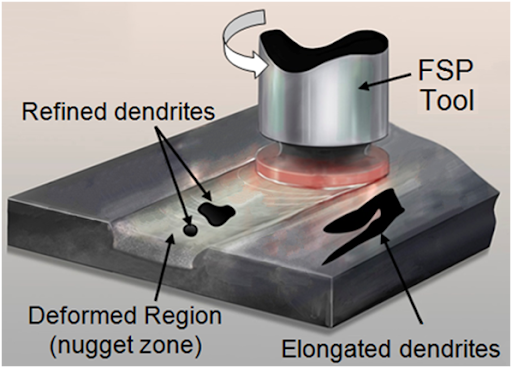
 Friction stir processing is a solid-state method to develop composite especially surface composite. In this method, a non-consumable rotating tool is used to make a composite. The tool is allowed to be inserted inside the workpieces up to a certain depth to process the material. The tool will be rotating with a certain rotating velocity and also travel at a certain travel speed. With the rotation of the tool, the material will also stir and rotate which produces dynamics recrystallization in the material and forms fine grain materials.


Fig. Frictions stir processing

The development of fine grain material plays important in the changes of mechanical and material properties. It improves the hardness, strength, toughness, and wear resistance of the material. These are the important mechanical properties to make any mechanical component.  

To make composites with the help of FSP, grooves or holes need to be made on the upper layer of material to be processed. This can be done by any milling machine. Hard ceramic particles such as SiC, B4C, MoS2, Al2O3, Tio2 can be filled in this grooves. The first step is to close this groove with the pinless tool. Then a non-consuming rotating tool is employed over the work surface with the predecided rotational speed. The FSP tool consists of a pin and column. The pin part will penetrate inside the workpiece and force the material to stir along with it. Because of this, the material will go into intense plastic deformation and dynamics recrystallization happens with the processed material.


Fig. FSP tool

Material microstructure will change and very fine grain microstructure will obtain that reflects the increment of mechanical properties of the material. Further mixing of hard ceramics with matrix material improves its surface properties. Such as hardness, wear, and corrosion resistance increase the applications of these materials in different industries. Composite of light materials such as magnesium and aluminum alloy can replace the application of hard materials such as steel and tungsten in various requirements.


Author 
Dr. Hemendra Patle
Asso. Prof. - Department of Mechanical Engineering, NIIST, Bhopal

Monday, May 27, 2024

Understanding Expert Systems: Bridging Human Knowledge and Technology

Understanding Expert Systems: Bridging Human Knowledge and Technology

An expert system represents a collection of software designed to tackle problems within a specific domain that typically necessitates human expertise. It harnesses encoded knowledge to facilitate solutions, leveraging information derived from expert sources and translating it into a format conducive to the system's inference and reasoning processes. This knowledge is sourced from specialists or authoritative references like texts, journals, and databases. Frequently, this category of knowledge requires thorough education and practical immersion in particular disciplines such as medicine, geology, system configuration, or engineering design. Once a substantial repository of expert knowledge is amassed, it undergoes encoding, insertion into a knowledge base, and continuous testing and refinement throughout the system's lifecycle.

Expert systems possess distinctive characteristics that set them apart from conventional computer systems in significant ways.

1. Expert systems prioritize knowledge over data to drive the solution process, echoing the sentiment that knowledge is paramount. This underscores the significance of insightful information in guiding decisions and actions. Much of the knowledge employed tends to be heuristic, emphasizing practical insights and rules of thumb rather than rigid algorithms. 

2. The knowledge within an expert system is encoded and managed independently from the control program. This means that it is not integrated into the control program during compilation. Consequently, updates and refinements to the knowledge base can be made incrementally without requiring the recompilation of the control programs. Additionally, in certain instances, it is feasible to employ different knowledge bases with the same control programs, thereby generating various types of expert systems. These systems are often called expert system shells, as they can accommodate different knowledge bases.

3. Expert systems can explain the rationale behind specific conclusions and the necessity for requested information during consultations. This functionality holds significance as it enables users to evaluate and comprehend the system's reasoning process, thereby enhancing the user's trust in the system's capabilities.

4. Expert systems utilize symbolic representations such as rules, networks, or frames to embody knowledge, and they execute their inference processes through symbolic computations that closely mimic the manipulation of natural language. (One notable exception to this pattern is expert systems founded on neural network architectures.)

5. Expert systems frequently engage in reasoning with metaknowledge, which involves the utilization of knowledge about themselves, including their own limitations and capabilities.

Applications

1. Medical Diagnoses (Internal Medicine, Pulmonary Diseases, Infections Blood Diseases)
2. Diagnosis of complex electronic and electromechanical systems.
3. Planning experiments in biology, chemistry and molecular genetics forecasting crop damage
4. Location of faults in computer and communications systems.
5. Analysis of structural systems for design or as a result of earthquake damage.
6. Estate planning for minimal taxation and other specified goals.
7. Stock and bond portfolio selection and management
8. The design of very large-scale integration (VLSI) systems.
9. Numerous military applications ranging from battlefield assessment to ocean surveillance.
10. Planning curricula for students.

Author:
Prof. Mohini Dhummerkar
Assistant Professor
Department of AIML, NIIST


Thursday, May 23, 2024

An Introduction of civil engineering and civil engineering scope:-

 Civil Engineering -

1.  An area of study that involves the investigation, design, construction, and maintenance of buildings and infrastructural systems— is a branch that encompasses a myriad of projects including but not limited to buildings, bridges, roads, dams, airports, tunnels and water supply systems.

2.  The engineers involved apply physical laws such as the principles of mechanics and scientific information from geologists on earth materials or climatologists on weather patterns in order to create these structures which will ensure safety first while also taking into account social needs (sustainability), cost-effectiveness (assurance) among others.

3.     Most times civil engineers work closely with architects who bring aesthetic appeal into consideration through designs that would complement surrounding landscapes aesthetically appealing; urban planners are concerned about how these works fit within an overall urban environment plus any transportation needs it might generate or environmental engineers interested in minimizing negative impacts upon local ecosystems.

The scope of civil engineering is vast and it incorporates various subjects. There are a few key areas in civil engineering that one must be aware of:


1.      Planning construction organization, managing construction projects and making sure they comply with safety standards as well as being completed within time limits while meeting budget requirements.

2.      Coastal Engineering: Coastal engineers are concerned with the design and management of coastal structures and systems to protect the coast from erosion, mitigate the effects of storms and tsunamis, and support activities such as port development and beach nourishment.

3.      Geo-technical Engineering: Those in the geo-technical sector undertake a study on the behavior of soil and rock materials so as to be able to design proper foundations for buildings, effective slopes for roads and embankments, and structurally sound retaining walls and dams.

4.      Environmental engineering is another branch of civil engineering that looks at issues of water and wastewater treatment, solid waste management, pollution control activities and environmental remediation approaches in order to preserve or improve the quality of the environment.


Author

Prof. Akshay Jain

HOD, Civil Engineering

NIIST, Bhopal (M.P)

Monday, May 20, 2024

Enhancing Intrusion Detection Performance through Deep Learning Method

Enhancing Intrusion Detection Performance through Deep Learning Method

In the realm of cyber and data security, the field of intrusion detection systems (IDS) stands out as an area of active research. Traditional methods, such as data mining, statistical evaluation, and artificial neural networks, face significant challenges in achieving accurate intrusion detection. However, the emergence of machine learning algorithms offers promising solutions to this challenge. This paper presents a novel approach to intrusion detection, focusing on leveraging deep learning methodologies. Deep learning, as an extension of machine learning, holds the potential to enhance the accuracy of IDS. The proposed method employs a cascaded three-level convolutional neural network (CNN) architecture. Efficiency and scalability in intrusion detection hinge upon effective feature reduction. By streamlining features, the capacity for intrusion classification and attack detection is significantly enhanced. Notably, when applied to datasets like KDDCUP99 with diverse attributes, the proposed algorithm achieves a detection ratio nearing 100%, albeit with a slightly lower classification ratio due to attribute diversity. Comparative analysis demonstrates the superiority of the cascaded CNN algorithm over traditional CNN methods in both feature reduction and classification tasks. Particularly, the proposed algorithm showcases remarkable efficiency in handling dynamic attributes, thereby improving classification accuracy. the proposed approach utilizing cascaded CNN architecture presents a substantial advancement in intrusion detection and classification compared to conventional methods. Through the integration of deep learning techniques, this methodology offers a robust solution to the challenges encountered in traditional intrusion detection systems.

The global expansion of digitalization has interconnected the world into a single platform known as the cyber world. This encompassing digital realm includes all tools and platforms utilized for data sharing and transmission over the internet. However, the exchange of data within this vast information highway necessitates robust security systems to ensure the integrity and authentication of data. In response to these challenges, Anderson developed an intrusion detection system (IDS) in 1980, marking a significant milestone in cybersecurity research. Today, IDS remains one of the most widely employed methods for detecting various forms of malicious attacks within network environments. Deep learning techniques, such as Convolutional Neural Networks (CNN) and Long Short-Term Memory (LSTM), have demonstrated remarkable effectiveness across diverse domains, including natural language processing, computer vision, and speech recognition. Our study introduces a unified model called Multiscale Convolutional Neural Network with Long Short-Term Memory (MSCNN-LSTM), which integrates spatial-temporal information for intrusion detection purposes. CNN and LSTM, being prominent deep learning algorithms, excel in extracting spatial and temporal properties from datasets, respectively. While CNN primarily focuses on spatial feature extraction and has shown significant advancements in computer vision tasks, LSTM incorporates self-connected memory units to capture temporal dependencies within sequences. The synergy between these techniques enables the MSCNN-LSTM model to effectively handle intrusion detection challenges by leveraging both spatial and temporal characteristics of intrusion data. The complexity of intrusion data poses challenges for detection performance, emphasizing the need for feature reduction techniques. In this dissertation, we explore the utilization of CNN algorithms for feature reduction in intrusion detection systems. By prioritizing essential features and eliminating redundant ones, we aim to enhance the efficiency of IDS without compromising detection accuracy. this paper presents a comprehensive investigation into the application of deep learning techniques, particularly CNN and LSTM, for intrusion detection. The proposed MSCNN-LSTM model demonstrates promising capabilities in extracting spatial-temporal features crucial for effective intrusion detection. Additionally, our exploration of CNN-based feature reduction techniques offers insights into optimizing IDS performance. The subsequent sections of the paper delve into related work, proposed methodology, and experimental analysis, and conclude with future research directions.

The subsequent discussion delves into the methodology of machine learning, examining the strengths and weaknesses of various approaches concerning intrusion detection capability and model complexity. Recent research indicates a prevalent use of Convolutional Neural Network (CNN) methodologies to bolster the performance and efficacy of Network Intrusion Detection Systems (NIDS) in terms of detection accuracy and reducing False Alarm Rates (FAR). Notably, CNN techniques feature prominently in approximately 80% of proposed solutions, with a decision tree (dt) and Multilayer Perceptron (MLP) emerging as the most favored algorithms. Furthermore, analysis reveals that about 70% of the recommended approaches were evaluated using the KDD Cup'99 and NSL-KDD datasets due to the wealth of data available in these repositories. Nevertheless, as these datasets fail to adequately represent recent network threats, the applicability of proposed solutions in real-time scenarios is somewhat limited. To address these limitations and enhance intrusion detection accuracy, this study underscores the importance of bridging research gaps. Specifically, there's a need for improving model performance in detecting low-frequency attacks in real-world environments. Additionally, the exploration of cost-effective strategies to streamline complexity in proposed models is deemed essential for achieving optimal performance in intrusion detection applications.

Author 

Dr.P.K.Sharma

Principal, NIRT

Thursday, May 9, 2024

Why BBA (Bachelor of Business Administration) after 12th is a smart Choice?

Why BBA (Bachelor of Business Administration) after 12th is a smart Choice?

Picking the right graduation course is critical. Therefore, you need to understand what you need in your professional career. If you have any desire to be a manager in a big organization or want to start your own business sometime in the future, the BBA degree is all that you are looking for. This degree has a lot of significant worth, and there are many reasons for opting for this course over other courses.

A BBA degree: What Is It?

An undergraduate student who earns a Bachelor of Business Administration (BBA) degree is equipped with fundamental knowledge and skills related to the management and administration of business. BBA course typically is a 3-year undergraduate program that aims to give students a broad understanding with a wide comprehension of core business functions like finance, marketing, human resources, business law, operations and communication. Students will learn to apply business theories and principles to actual organizational settings.

The BBA Curriculum/program focuses on developing technical and specialized business skills and general professional abilities. Students will learn about business concepts and principles, leadership, economic and financial environment. They gain experience analyzing budget summaries, developing business plans, formulating business strategies, and using data analytics and business technology. Soft skills like cooperation, teamwork, critical thinking, presentation and communication are also the key learnings of this course. Upon finishing, BBA graduates are ready for entry-level management roles or can seek further business-related schooling. The degree opens up career opportunities in different enterprises and business capabilities.


Why consider BBA as a Career, as a Profession?

Many individuals consider a BBA to be simply just another bachelor’s degree variant of an MBA, however, this is untrue. A BBA degree has a ton of standing and value on the lookout and will put you on your way towards a cheerful and successful career.

Here are the few reasons and benefits of pursuing a Bachelor of Business Administration (BBA) as your undergraduate degree:

1.      Versatile Degree

A BBA degree is something beyond getting a college education for your ideal work. There’s something entirely different to it. While most degrees, particularly at the bachelor’s level, are more about theory, BBA combines both theory as well as practical application of knowledge and personality development. You likewise master numerous abilities to make you a wholesome professional expert and put you in a good position.


2.      Multi-Disciplinary

In a BBA degree, a few subjects are taught to make you a learned proficient so you have numerous options for seeking this degree. The various disciplines shrouded in a BBA degree are Marketing, Financial Accounting, Human Resources, strategic management, organizational behavior and Management Information systems.

3.      Professional Certification

BBA is a totally professional degree that interests understudies significantly about getting into professions in business and management. Students can get placed in good organizations just in the wake of getting their BBA degrees. Master’s degrees can be reconsidered since the abilities they confer frequently adjust intimately with what you realize through on-the-job experience without the weighty price tag. BBA holders have the most noteworthy employment rate compared to other bachelor’s degrees.

4.      Stepping Stone for Masters of Business Administration (MBA)

Graduates from any stream can join the MBA course, however, a BBA graduate will be far superior to other people. BBA is an excellent groundwork for an MBA. You are taught exactly the same things however dig a lot further into the subject in an MBA. In this way, you know the fundamentals as well as are more ready for the business world.

5.      Significant Pay and Benefits

A high salary, combined with incredible benefits, is one of the main objectives of most professionals. A BBA degree makes it conceivable. This degree opens ways to the best administrative and managerial professions where the compensation and benefits are the best. Moreover, you get promotions and advancement much quicker and when you switch organizations, you can get a significant boost in pay if you negotiate well.

6.      Job fulfillment

At the point when you apply for a BBA degree, you must have a clear vision of what direction you want to take your career in. You have decided to get into business and management all along. Consequently, you are in the field of your decision, and this will give you full satisfaction in your work. Most of the people spend their lives taking care of responsibilities they disdain.

7.      Self- awareness

As referenced before, a BBA degree isn’t just about education; you likewise find out about your personality and strive towards its development. The degree helps you to be a strong, confident and capable person equipped for taking care of teams and running an organization. Here you are learning to be a great team leader and to be a good team player. During your BBA Course, you will likewise need to give a lot of presentations, which will help you to be a confident presenter and you will figure out how to be an extraordinary public speaker. Towards the completion of your BBA degree, you will be a more evolved and wholesome individual.

8.      Trending course

Updated knowledge is one of the most indulging benefits of a degree. The BBA course is all-around planned and means to teach the students as much as could reasonably be expected in the business world. The course is likewise updated by the most recent patterns and trends in the business, giving students an additional benefit. From the best industry practices to the utilization of innovation and the latest technology, BBA students are better outfitted with knowledge and information.


A BBA degree will open a universe of chances for you regarding education and professions. In this way, if you are still vacillating about the degree, take the plunge! It will be the best choice you have made.


Author: 

Prof. Sajitha V. Nair

Assistant Professor

Department of Management

NRI Group of Institutions, Bhopal (M.P)